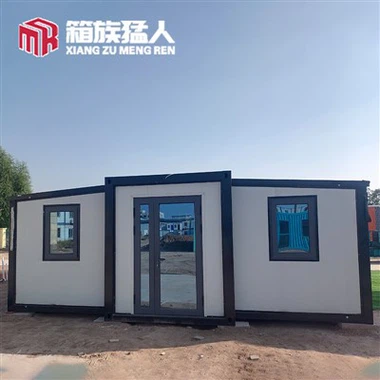


Sturdy Expandable Container House
$5500.00 | 0 (Min.Order)
Size:Fold size5850(L)*2250(W)*2500mm(H)Unfold size5850(L)*6400(W)*2500mm(H)
Loading:1x40HQ can load 1-2 units
Weight:2800kg
Description
| Size | Fold size5850(L)*2250(W)*2500mm(H) Unfold size5850(L)*6400(W)*2500mm(H) |
| Loading | 1x40HQ can load 1-2 units |
| Weight | 2800kg |
| Floor load | 250kg/sqm |
| Roof load | 100 kg/sqm |
| Wall panel | The thickness of the color steel EPS composite board is 75mm, the width is 950mm, the thickness of the color steel plate is 0.3mm, PE film is attached, the color is white gray, the inside and outside are pure flat non-embossed insulation boards, and the bulk density is 12kg/m³ flame retardant. |
| Roof | Roof tile color steel single plate interlocking/50 thick EPS composite plate, thickness 0.3mm, interactive interlocking. |
| Electrical | Optional European standard, American standard, Austrian standard and national standard |
| Water proof | D-type rubber strips for each movable joint; butyl waterproof tape |


The expandable container house is an innovative solution to the housing crisis. It offers an affordable and sustainable living solution for individuals and families all over the world. The installation of an expandable container house is simple and straightforward, making it an ideal option for those who want quick and easy housing arrangement.
Here are the steps to install an expandable container house:
Step 1: Site Preparation
The first step in the installation process is site preparation. Select a suitable location on level ground cleared of any debris and vegetation. This will ensure a flat and solid base for the container house. Additionally, check that the site has adequate space around the perimeter to allow for the expansion of the container.
Step 2:Foundation and Leveling
Once the site is cleared, prepare the foundation. Most expandable container houses come with a steel frame that enables them to be placed on any hard, level surface. The leveling of the foundation is essential to prevent any structural damage to the house. This is mainly because an uneven surface will result in the house being tilted, which can cause damage to its structure.
Step 3: Place, Expand and Connect
Once the foundation is in place, move the container to the site, expand it, and connect the joints. The process of expanding is relatively simple and typically takes a few minutes to complete. This will create additional living space without the need for a larger container or additional connecting structures.
Step 4: Electrical and Plumbing
The next step is to set up the electrical and plumbing systems. Connect the house to the local power supply and water source and install the plumbing fixtures like tub, sink, toilet, and shower as required. Electrical wiring should be installed by a licensed electrician to ensure safety and proper installation.
Step 5: Final Touches
The final step is to add the finishing touches to the house. These include the installation of flooring, insulation, and painting. With these complete, you can move in and begin enjoying your new home.
In conclusion, the installation of an expandable container house is quick, easy, and can be completed within a short time. With proper site preparation, leveling of the foundation, and careful installation of utilities like plumbing and electrical, you can have a fully functional home that is affordable and sustainable.
Hot Tags: sturdy expandable container house, China sturdy expandable container house factory, expandable shipping container homes, 40ft expandable container home, Portable Emergency Expandable Container House, Custom Waterproof Expandable Container House, Custom Expandable Container Houses, Micro Expandable Container House